
AI Logistics ERP Development Company in Chennai — The Enterprise Blueprint for AI-Native Supply Chains
iStudio Technologies is a Chennai-based AI logistics ERP development company and one of the leading custom logistics software developers in Chennai, engineering AI transport management software, supply chain ERP, freight forwarding platforms and cognitive WMS systems for enterprises across Tamil Nadu and India.
The following is the exhaustive engineering specification blueprint our supply chain ERP developers in Chennai use to architect AI-native Logistics Enterprise Resource Planning (ERP) platforms — the absolute functional requirement specification for modern, autonomous supply chain networks deployed by enterprise logistics app development teams across Tamil Nadu.
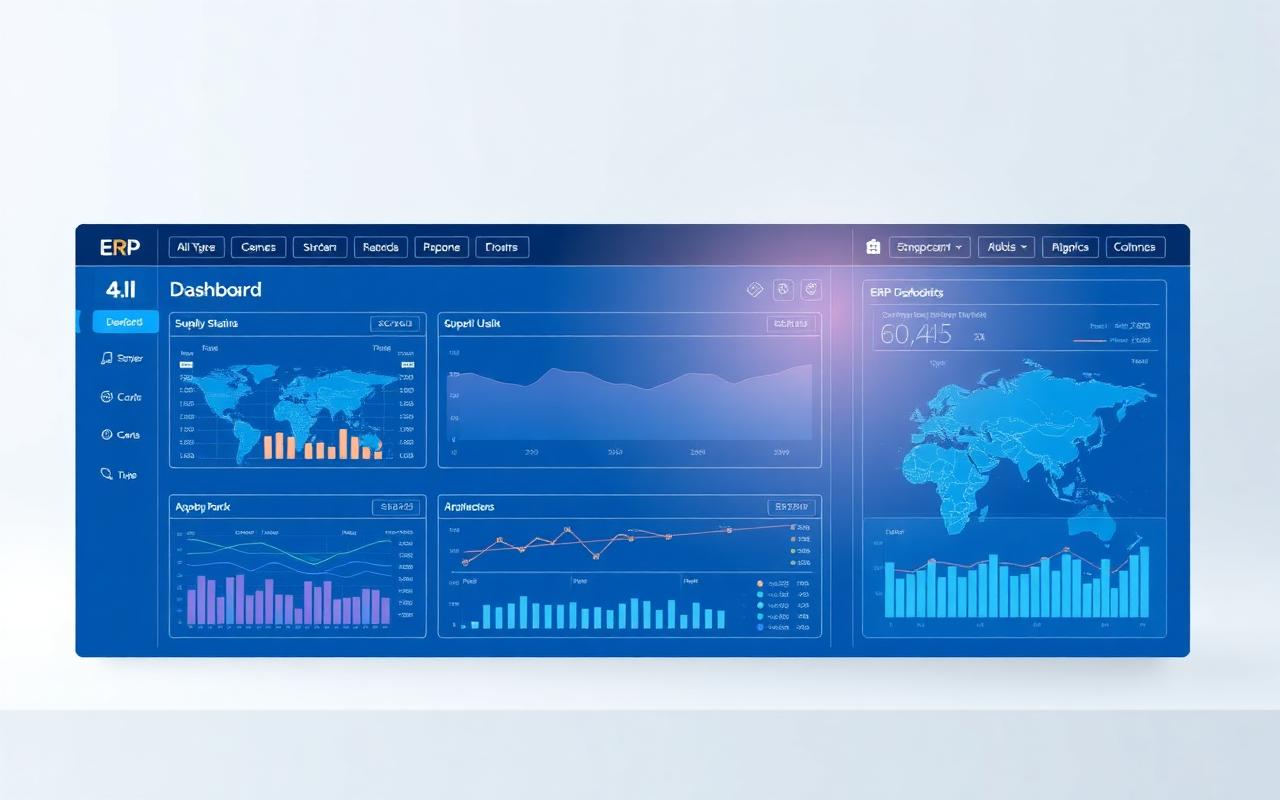
1. Core Transportation Management System (TMS) Module
The AI-native TMS moves past static routing APIs and historical tracking. It functions as an autonomous execution engine that continuously recalculates network state based on multi-modal streams of telemetry.

Autonomous Dynamic Route Optimization (DRO) Engine
Deep Reinforcement Learning (DRL) Integration: Instead of standard Dijkstra or A* algorithms that optimize purely for static distance, the routing engine utilizes DRL (Deep Q-Networks) to treat the regional road network as a dynamic game board.
Real-Time Ambient Ingestion: The engine continuously pulls data from municipal traffic cameras, weather radar feeds, historical bottleneck databases, and active driver telemetry.
Edge-Recalculation: If a truck encounters an unexpected delay (e.g., flash flooding, localized protests, or extreme border congestion), the ERP executes an on-the-fly matrix recalculation. It updates the vehicle's specific delivery sequence in under 400 milliseconds, routing it via secondary links without requiring dispatcher intervention.
Multi-Stop Micro-Fulfillment Routing: For last-mile delivery operations, the AI models clustering algorithms (K-Means combined with genetic algorithms) to dynamically group packages based on dimensional weight, delivery urgency, and residential gate access windows, reducing total fleet mileage by up to 22%.
Intelligent Carrier Sourcing & Spot-Market Tendering
Predictive Rate Analytics: The module ingests macroeconomic indices, historical internal lane histories, and public freight spot-market data. It uses LSTM (Long Short-Term Memory) networks to forecast spot-market price fluctuations 7 to 14 days into the future.
Automated Cascade Tendering: When an internal fleet vehicle is unavailable, the ERP evaluates private carrier networks based on a multi-factor trust score (comprising historical on-time delivery percentages, tender acceptance rates, and cargo claims history).
Autonomous API Negotiation: The ERP automatically transmits localized tender requests via API to third-party carriers. If the initial carrier rejects or fails to respond within a custom 15-minute window, the AI automatically cascades the offer down to the next best match, adjusting the bid price dynamically within predefined financial boundaries.
Cross-Docking & Consolidation Optimization
LTL to FTL Algorithmic Bin Packing: For Less-Than-Truckload (LTL) shipments, the AI uses 3D bin-packing heuristics powered by computer vision constraints. It automatically determines how to consolidate fragmented cargo into a single Full Truckload (FTL) container based on weight distribution laws, stackability limits, and destination proximity.
Just-In-Time (JIT) Cross-Dock Scheduling: The system monitors incoming inbound linehauls and outgoing last-mile delivery schedules simultaneously. It maps their overlapping timelines and assigns specific dock doors so that incoming freight can be directly moved across the floor to an outbound vehicle without entering long-term storage, removing double-handling friction.
2. Advanced Warehouse Management System (WMS) Module
A cognitive WMS transitions a storage facility from a passive holding space into a predictive, self-sorting node within the network.

Predictive Slotting & Inventory Positioning
Velocity-Based Spatial Optimization: The ERP continuously analyzes sales pipelines, historical seasonality, and manufacturing schedules. Using predictive clustering, it calculates the "velocity score" of every Stock Keeping Unit (SKU).
Automated Relocation Workflows: Rather than waiting for a manual inventory audit, the ERP autonomously triggers internal warehouse movement tasks during low-activity night shifts. It directs forklift operators to relocate high-velocity items to optimal lower-level forward-picking bays, and pushes slow-moving stock to high-tier or deep-reserve storage. This shortens average picker travel paths by up to 30%.
Dynamic Micro-Fulfillment Balancing: In urban micro-fulfillment centers, the AI monitors real-time hyper-local ordering patterns and automatically triggers reorder points to ensure safety stock matches neighborhood demographics.
Computer Vision Quality Assurance & Inventory Tracking
Neural Network Barcode & Damage Analysis: High-resolution cameras installed at receiving and packing docks pass live video feeds into a localized Convolutional Neural Network (CNN). The AI automatically reads barcodes, labels, and text on incoming cartons simultaneously, verifying them against the digital Bill of Lading (BOL).
Structural Defect Detection: The vision system scans for structural anomalies such as crushed box corners, water damage, or broken security seals. If a defect is flagged, the ERP blocks the item from entering standard inventory, automatically routes it to a Quality Assurance (QA) hold bay, and attaches photos of the damage to a vendor non-compliance report.
Volumetric Space Analysis: Vision sensors placed throughout warehouse aisles monitor shelf-space utilization in real-time, instantly alerting the system if a slot is empty or if an item has been misplaced in the wrong bin.
Dynamic Task Interleaving & Employee Orchestration
Real-Time Coordinate Tracking: The ERP maps the precise indoor X/Y/Z coordinates of all warehouse personnel and material handling equipment (MHE) via Wi-Fi triangulation, BLE beacons, or rugged RF scanning terminals.
Deadhead Elimination Algorithms: Instead of allowing a forklift operator to return empty-handed to the receiving dock after completing a put-away task, the ERP's orchestration engine uses bipartite matching algorithms to instantly assign them a nearby picking or replenishment task. This eliminates "deadhead" travel time, ensuring equipment is fully utilized on both legs of an internal trip.
3. Intelligent Fleet Management & Asset Maintenance Module
This module ensures that fleet uptime is mathematically maximized by treating vehicles as interconnected IoT nodes rather than isolated mechanical assets.

[ Vehicle OBD-II / CAN bus Sensors ]
                │
     (Real-Time MQTT Stream)
                │
                ▼
[ ERP Predictive Maintenance Engine ]
                │
     (Anomaly Detected: Fuel Rail Pressure Drop)
                │
                ├──► [ Automated Workshop Scheduler ] ──► Books Bay 3 (Tuesday 8:00 AM)
                │
                ├──► [ Inventory Control Module ]    ──► Allocates OEM Fuel Rail Sensor
                │
                └──► [ TMS Live Routing System ]     ──► Reassigns Future Loads to Active Assets
IoT Telematics & Predictive Breakdown Modeling
Continuous CAN bus Data Extraction: Fleet assets are equipped with heavy-duty telematics devices that stream raw engine parameter data (such as exhaust gas temperatures, oil viscosity indexes, battery voltage drops, and fuel rail pressure oscillations) directly into the ERP via lightweight MQTT protocols.
Proactive Failure Prediction: Rather than relying on simple mileage-based service schedules, the ERP runs predictive maintenance models using Random Forest and survival analysis algorithms. If the system identifies a subtle, multi-variable signature indicative of an impending component failure (e.g., a simultaneous micro-drop in oil pressure paired with an engine temperature spike), it flags the asset before a breakdown occurs.
Automated Service Loop Execution: The ERP instantly checks internal workshop bay availability, verifies if the required Original Equipment Manufacturer (OEM) replacement parts are in stock, allocates the spare parts, and creates a maintenance work order—all while notifying the TMS to remove the vehicle from upcoming dispatch scheduling.
Computer Vision Driver Safety & Telematics Analytics
Edge-Based Cabin Analysis: Driver-facing cameras equipped with lightweight, edge-computer vision models process video feeds locally to detect indicators of operator fatigue (such as micro-sleeps, continuous yawning, or prolonged gaze distraction).
Immediate Field Notifications: When a hazard threshold is breached, the app issues an audible cabin alert and triggers a high-priority operational exception in the central ERP.
Biometric Risk Scoring: The system correlates hard braking, rapid acceleration, and cornering g-forces with shift duration data to generate localized "Driver Safety Risk Metrics." These metrics are fed directly into the HR payroll module to automatically calculate safety-based performance bonuses.
Fuel Optimization & Carbon Footprint Diagnostics
Aerodynamic & Idling Cost Trackers: The ERP cross-references fuel flow rates with vehicle speed, payload weights, and ambient wind vector data to isolate fuel theft from operational inefficiencies.
Alternative Energy Fleet Tracking: For mixed fleets utilizing electric or alternative-fuel vehicles, the ERP embeds specialized algorithms that compute battery degradation cycles, local charging station availability, and grid pricing models to schedule recharges at lowest-cost intervals.
4. Global Trade Management & Customs Compliance (EXIM) Module
The EXIM module mitigates the risks of international shipping by introducing automated document analysis and real-time regulatory ingestion layers.

Generative AI Customs Document Processing
Large Language Model (LLM) Invoice Extraction: When a global shipment is initiated, the ERP ingests multi-page PDFs of commercial invoices, certificates of origin, and packing lists in various languages and layouts.
Automated JSON Translation: Using fine-tuned vision-LLMs with strict schema boundaries, the system extracts critical entities (such as seller data, consignee identification, total weights, currencies, and item descriptions) and converts them into structured JSON objects, completely removing human manual data entry errors.
HSN Code Matching: The system passes product descriptions through a semantic vector search engine to instantly match items with their exact Harmonized System of Nomenclature (HSN) codes, calculating import tariffs and duties automatically.
Automated Regulatory Risk & Screening Matrices
Denied-Party Screening Automation: The ERP maintains real-time API sync with international sanction registries, global law enforcement watchlists, and politically exposed persons (PEP) databases. Every entity attached to a shipment is auto-vetted before documentation is submitted to customs.
Border Hold Probability Modeling: By analyzing historical customs clearing speeds and port inspection trends, the system assigns a compliance risk score to every international shipment. If an export invoice lacks a specific regional declaration or regulatory certificate, the ERP blocks the shipment from gate-out, alerting the compliance team to resolve the issue before demurrage fees begin to accumulate at the port terminal.
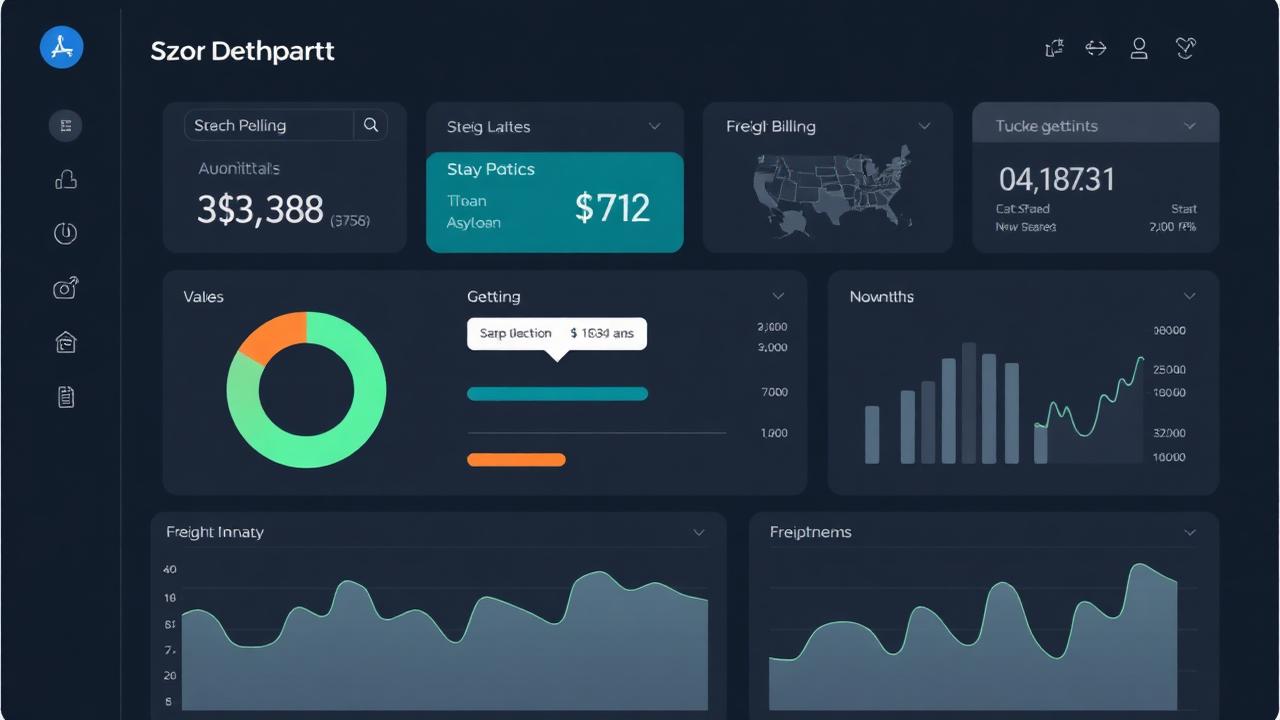
5. Financial Accounting, Billing, and Tariff Management Module
This layer stops revenue leakage by automating complex multi-party reconciliation workflows and ensuring localized regulatory compliance.
Automated 3-Way Freight Audit & Matching
Multi-Document Reconciliation Loops: Freight billing disputes are common when handled manually. The financial module uses specialized matching microservices to parse three critical documents: the original Freight Quote/Purchase Order, the digital Proof of Delivery (POD) showing actual delivered quantities, and the carrier's final invoice.
Discrepancy Isolator: If all line items match within a predefined tolerance window (e.g., variance less than 1%), the invoice is automatically approved and pushed to accounts payable. If a variance is found—such as an unvetted detention fee or a missing pallet penalty—the ERP isolates the exact line item, blocks payment for that specific charge, and opens an automated dispute ticket with the carrier.
Multi-Tenant Contract & Tariff Matrices
Dynamic Spot Rate Integration: The billing engine supports hyper-complex, multi-tier contract rules. It computes base freight rates, fluctuating fuel surcharges (FSCs) tied to national weekly indexes, specialized accessorial fees (like liftgate services, inside delivery, or residential delivery penalties), and multi-currency conversions in real-time.
Instant Quote Generation: When an enterprise client requests a spot quote via a customer portal, the billing engine checks historical margins, current network asset density, and market spot indexes to return an optimized price quote within seconds.
Indian Market Localizations & GST Engine Integration
Direct E-Invoice & E-Way Bill Automation: The ERP communicates directly with the Goods and Services Tax Network (GSTN) GSP servers. The moment a freight trip sheet is authorized by the dispatch team, the ERP constructs the required schema payload, validates the HSN/SAC codes, fetches the Invoice Reference Number (IRN) and QR code, and generates the active E-Way Bill simultaneously.
Input Tax Credit (ITC) Protection: The system monitors vendor invoice uploads on the GST portal, cross-referencing your internal accounting ledgers against GSTR-2B filings to track mismatched tax filings from subcontractors before they impact your financial returns.