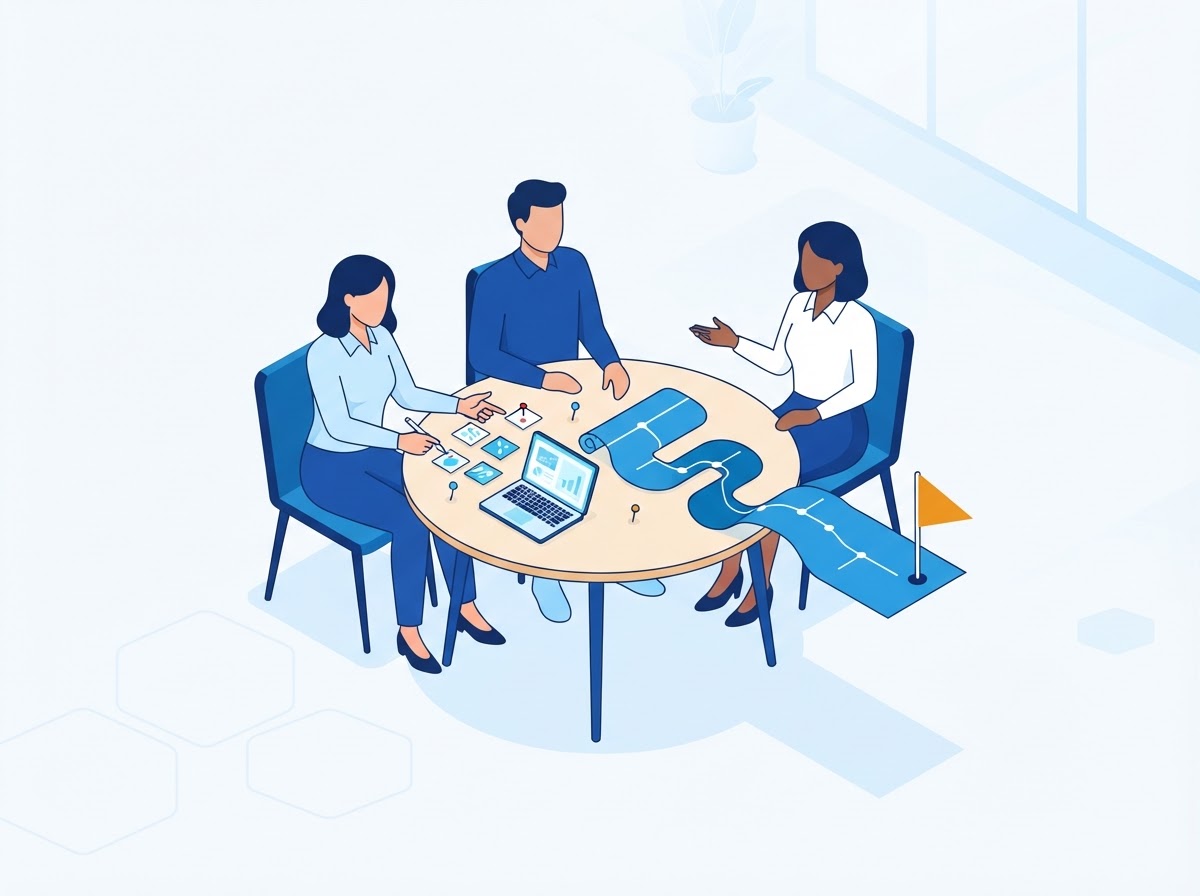
What Is a Doctor Appointment Booking App — And Why Your Healthcare Business Needs One in 2026
A doctor appointment booking app is a digital healthcare platform that connects patients with doctors, valid appointment slots, and healthcare services. Instead of patients calling a clinic repeatedly to ask about availability, or your reception team managing three different tools to coordinate one schedule, a booking app handles the entire journey digitally — from the moment a patient searches for a specialist to the moment they complete a follow-up consultation.
The patient may only see a few simple steps. The platform behind those steps must coordinate doctor schedules, clinic locations, appointment durations, existing bookings, leave periods, payments, telemedicine, walk-in management, and front-desk activity simultaneously. That coordination is what separates a genuinely useful doctor booking platform from a basic calendar with an online form in front of it.
In 2026, building a doctor appointment app is not just about digitising a booking form. It is about creating a connected healthcare ecosystem — where patients, doctors, reception teams, and administrators all work from the same real-time data. India's digital health market is growing rapidly. Patients increasingly expect the same convenience from healthcare that they get from food delivery and e-commerce. Clinics and hospitals that offer a seamless digital experience are winning the patients that manual competitors are quietly losing.
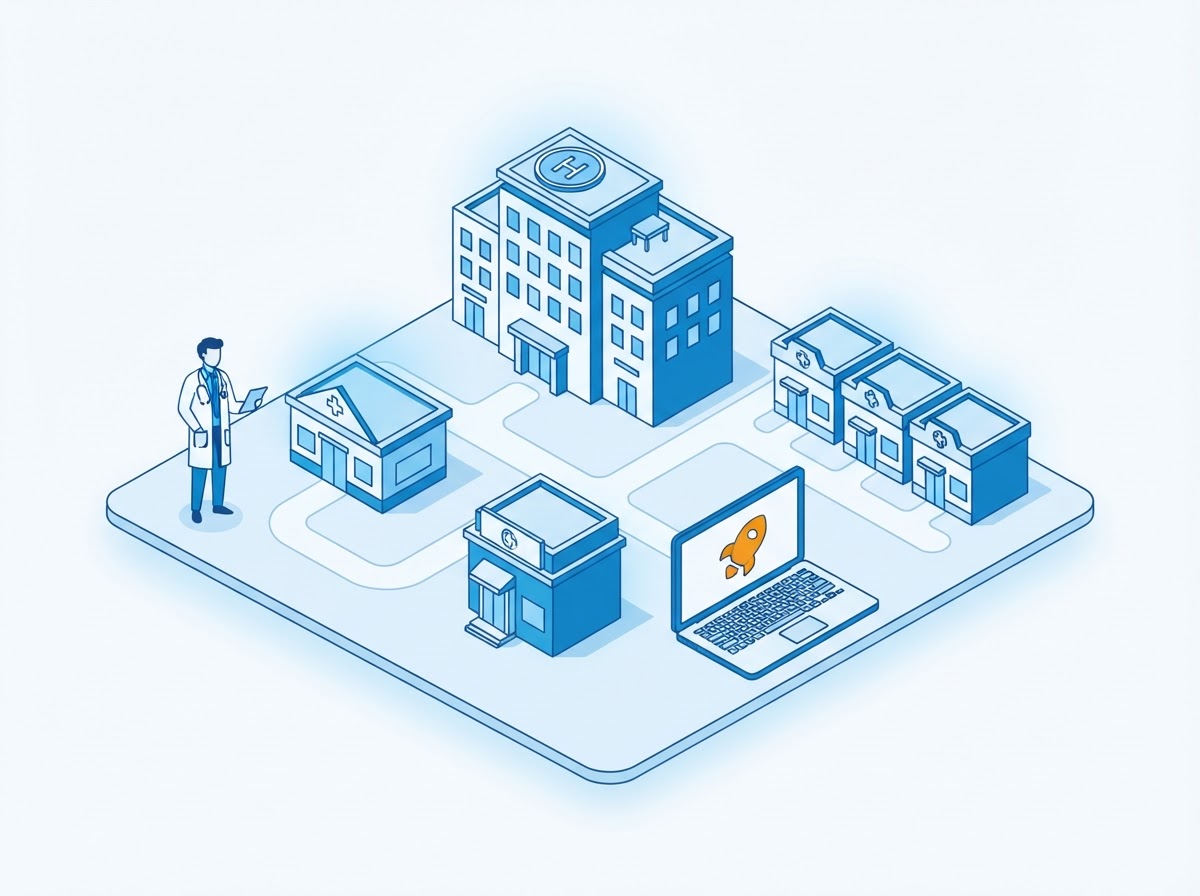
Who Can Build a Doctor Appointment Platform?
Accept direct appointments and manage physical or online consultation schedules without depending entirely on phone calls or manual coordination.
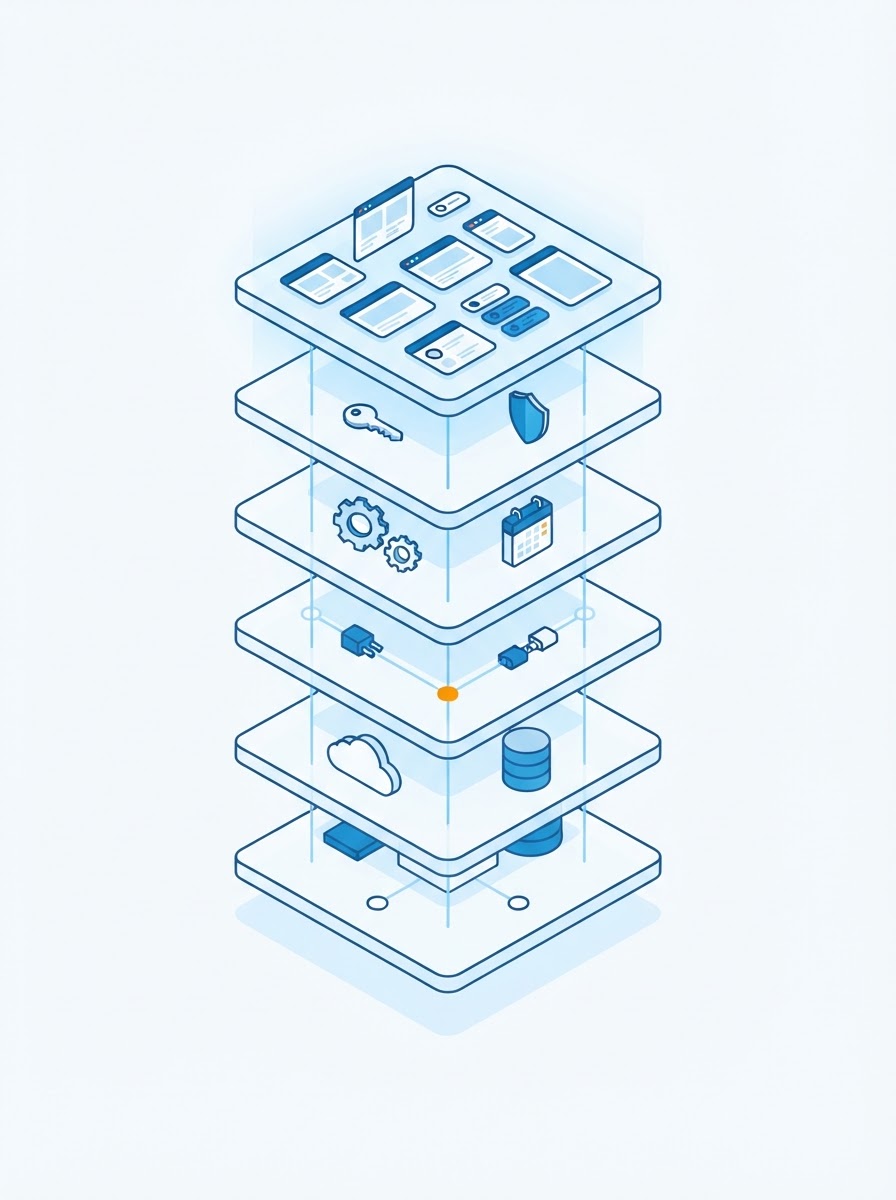
Doctor Appointment Platform Architecture — How Every Layer Works Together
A strong architecture is what separates a platform that handles 50 bookings a day from one that handles 5,000. At iStudio Technologies, we build in layers — so every module can scale independently, every integration operates through a controlled interface, and a change in one part of the system does not break another.
Layer 1
User Experience Layer
What patients, doctors, reception staff, and administrators interact with directly.
What Happens When a Patient Books?
Consider a patient choosing a cardiologist at 5:30 PM from the patient app.
The app sends the request to the scheduling engine. The engine checks: Is the doctor working at that location at that time? Are there confirmed bookings, temporary reservations, or schedule exceptions blocking that slot? Is the consultation type available? If payment is required, the slot is temporarily reserved. Once the transaction succeeds, the appointment is confirmed.
The clinic dashboard updates immediately. The patient and doctor receive notifications. Connected HMS or EHR systems are updated where the integration scope requires it. The reception team sees the new booking in their queue view.
That is why architecture matters. Every simple tap on the patient's screen triggers multiple coordinated workflows underneath it — and a weak architecture is where healthcare platforms break down under real clinical load.
The Real Pain Points in Healthcare Appointment Management — and How Our Platform Solves Each One
Every discovery session we run with clinics and hospitals in Chennai surfaces the same operational problems — regardless of whether the organisation has 5 doctors or 50. Here are the seven most damaging pain points, and the specific ways our platform resolves each one.
-
01
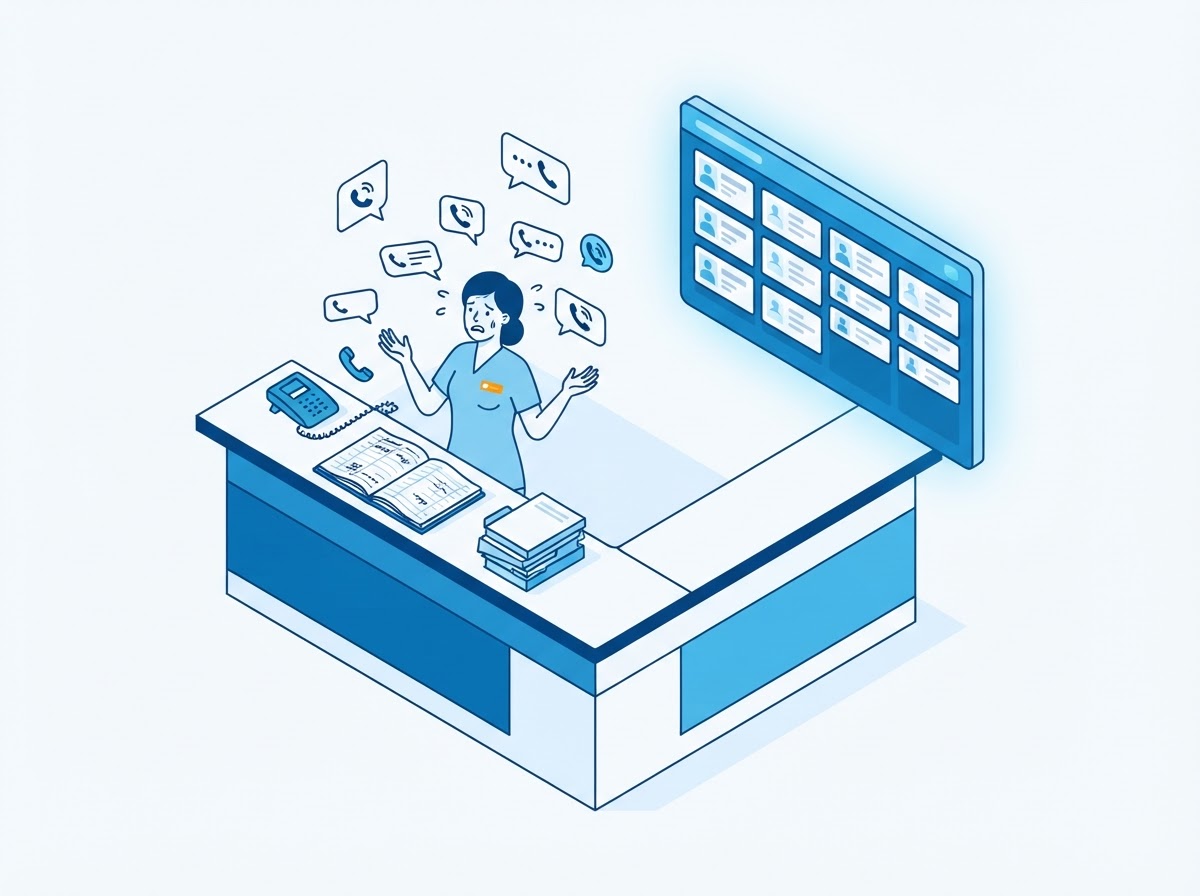
Pain Point 1: Patients Keep Calling Reception to Check Availability
When your appointment slots are not visible online, every patient who wants to book makes a phone call. For a busy clinic in Chennai, that can mean 80 to 120 calls a day to reception — most of them asking the same three questions: Is Dr. X available on Thursday? Can I come at 5 PM? Can I reschedule my Friday appointment? Your reception team spends half its shift managing calls that the patient app handles automatically.
Platform solution: The patient app shows live availability — updated in real time — so patients can self-serve the entire booking, rescheduling, or cancellation workflow without making a single call. Clinics using our platform typically report a 40 to 60 percent reduction in inbound appointment calls within the first 60 days.
-
02
Pain Point 2: Double Bookings Across Multiple Channels
A patient books online at 6:00 PM. At the same moment, a receptionist assigns the same slot to a walk-in. The doctor's assistant also pencils in a phone booking for the same time. When all three patients arrive, the waiting room becomes a conflict. Double bookings are not a reception error — they are a system architecture failure. When multiple tools can write to the same schedule without coordinating, conflicts are inevitable.
Platform solution: Every booking channel — patient app, website, reception phone entry, walk-in registration — passes through the same scheduling engine. The engine validates and locks each slot before confirming it. One source of truth means zero double bookings, regardless of which channel the appointment came through.
-
03
Pain Point 3: Doctors Working Across Multiple Clinics Create Scheduling Chaos
A senior consultant working at three clinics in different parts of Chennai on different days is a scheduling nightmare when each clinic maintains its own calendar. Patients at one clinic cannot see that the doctor is already committed at another. Overbooking and missed appointments follow. The doctor arrives at Clinic B to find a patient scheduled during time reserved for Clinic A.
Platform solution: Location-aware scheduling manages the doctor's full availability across all configured clinics simultaneously. A booking made at Clinic B automatically checks commitments at Clinics A and C. The doctor's unified calendar prevents overlaps — no matter which clinic initiated the booking.
-
04
Pain Point 4: Walk-Ins Disrupt the Entire Scheduled Day
Walk-in patients are a reality in every clinic. But when reception has no system to manage them alongside booked appointments, walk-ins absorb time that was committed to scheduled patients. Booked patients wait longer. Some leave. Some do not come back. The doctor's schedule becomes unpredictable, and the afternoon runs 45 minutes behind the morning.
Platform solution: The walk-in registration and queue management module brings both patient types into the same operational view. Reception registers walk-ins in under 30 seconds. The queue display shows the doctor exactly who is next, who is waiting, and how the day is progressing — with walk-ins slotted into available gaps rather than dropped in front of booked patients.
-
05
Pain Point 5: No-Shows Waste Doctor Time and Clinic Revenue
A patient who does not show and does not cancel wastes a consultation slot that another patient needed. For a specialist charging ₹800 to ₹2,000 per consultation, a clinic with 6 no-shows per day is leaving ₹4,800 to ₹12,000 on the table — every day. Most no-shows are not intentional. Patients forget. Patients assume they can cancel at the last minute without consequence. Patients do not receive a reminder in time.
Platform solution: The notification module sends automated reminders at 24 hours, 2 hours, and 30 minutes before the appointment. Patients can reschedule or cancel directly from the reminder — without calling reception. Booking deposits, where configured, create a financial incentive to show up or give advance notice. AI no-show intelligence identifies high-risk bookings for additional outreach.
-
06
Pain Point 6: Doctors Running Late with No Way to Communicate
A doctor delayed by a complex case has no good way to communicate the delay to the six patients waiting outside. Reception is told verbally. They tell patients individually, imprecisely, and inconsistently. Patients sit without information. Some leave. Some complain. The waiting room becomes frustrated — not because the delay is unacceptable, but because no one communicated it clearly.
Platform solution: Reception updates the doctor's status in the system. The platform automatically pushes a delay notification to all waiting patients with an updated estimated wait time. Patients can wait comfortably, run a nearby errand, or decide to reschedule — all without creating work for the reception team.
-
07
Pain Point 7: Management Cannot See What Is Actually Happening Across Branches
A healthcare chain with four clinics across Chennai needs to know which branches are performing, which doctors have low utilisation, which time slots fill quickly and which sit empty, and which branches have the highest no-show rates. When this information lives in separate Excel files updated manually by each branch, it arrives too late to act on it.
Platform solution: The admin dashboard gives healthcare chain managers a real-time operational view across all branches — appointment volume, cancellations, no-shows, peak hours, and doctor utilisation — without waiting for anyone to compile a report. Data-driven decisions become daily practice rather than an end-of-month exercise.
Real Results — Doctor Appointment App Development Case Studies by iStudio Technologies
The strongest proof that a technology investment is right is not a feature list — it is what happened when real healthcare organisations deployed the platform with real patients and real clinical teams.
Case Study 1
SyncCarePlus — Connected Healthcare, Doctor Booking & Wearable Integration
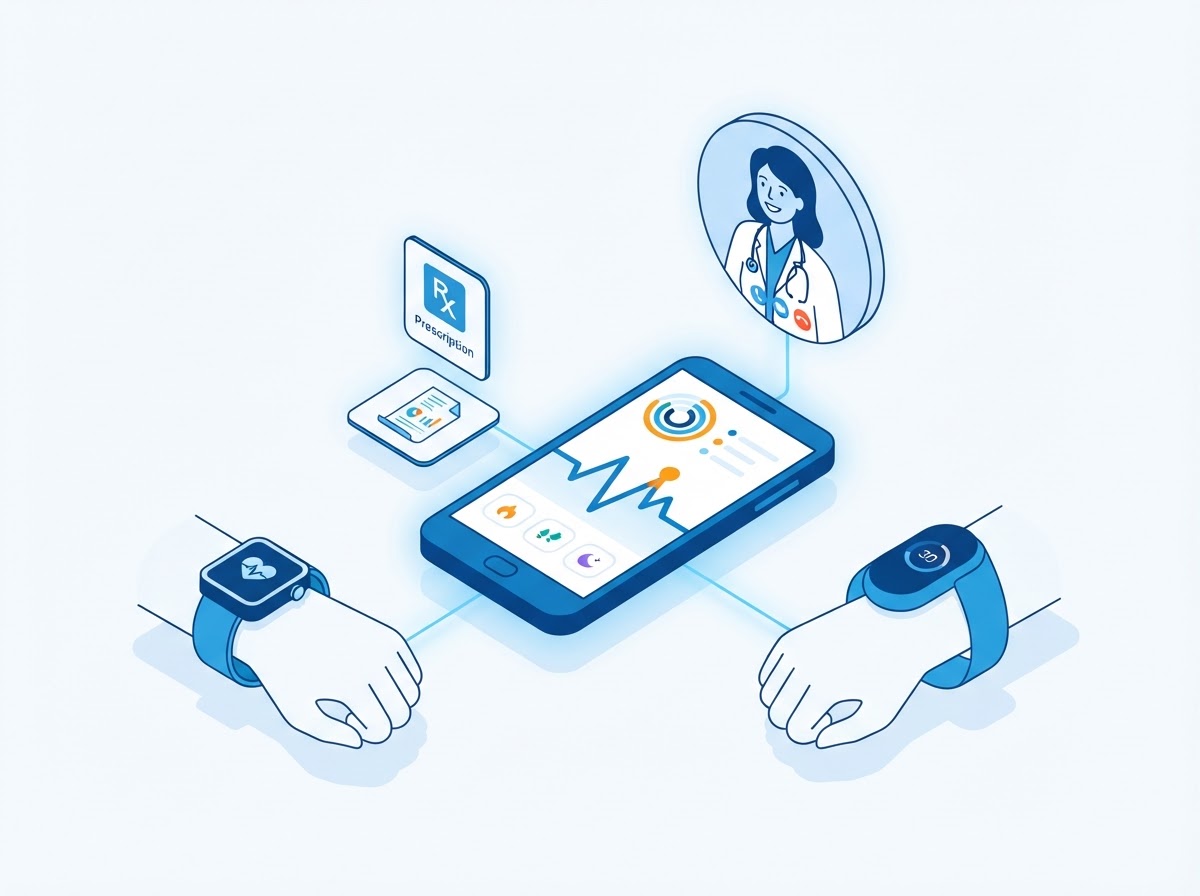
SyncCarePlus is a healthcare platform built by iStudio Technologies that goes beyond appointment booking into a fully connected care experience. The platform connects patients with doctors through intelligent discovery and booking, supports scheduled and on-demand video consultations, and extends the patient relationship into ongoing health monitoring through wearable device integration.
What makes SyncCarePlus different:
-
Smart Doctor Booking: Patients search by speciality, availability, and consultation mode — and see only doctors who can genuinely see them in the chosen time window. The scheduling engine checks all configured clinics and commitment types before displaying any slot.
-
Video Consultation: Scheduled telemedicine sessions run inside the platform. Patients join from the appointment card; doctors start the session from their doctor app. No third-party tool, no separate login.
-
Health Dashboard: Patients see their health trends, appointment history, and care timeline from one central interface — shifting the relationship from transactional to ongoing.
-
Medical Records Management: Prescriptions, laboratory reports, and consultation notes are organised in one patient record — accessible to the patient and shareable with connected providers where authorised.
-
Wearable Connectivity: The platform integrates with Fitbit, Apple Health, Apple Watch, and Wear OS — pulling activity, heart rate, and sleep data into the patient's health dashboard and making it available to treating doctors.
-
Smart Alerts: Appointment reminders, medication alerts, and health threshold notifications keep patients engaged with their care journey between consultations.
-
AI-Enabled Insights: The platform uses AI to surface relevant health trends from connected device data and consultation history — positioning the product as an ongoing health companion, not just a booking tool.
-
Patient + Provider Connectivity: The architecture supports multiple provider types under one platform — doctors, clinics, and diagnostic services connected into a single patient experience.
-
Connected-Care Architecture: Doctor booking is not the final interaction. It sits inside a broader platform designed for ongoing patient engagement — chronic care, preventive health, and remote monitoring.
-
Wearable-to-Doctor Data Flow: Health data from connected devices can be surfaced to treating doctors at the point of consultation — enabling remote monitoring and data-informed clinical conversations.
SyncCarePlus demonstrates that a healthcare platform can extend far beyond appointment access into a product that keeps patients connected to their care between clinic visits — and makes every consultation more clinically informed.
Case Study 2
Dhanvan — Multi-Service Healthcare Ecosystem
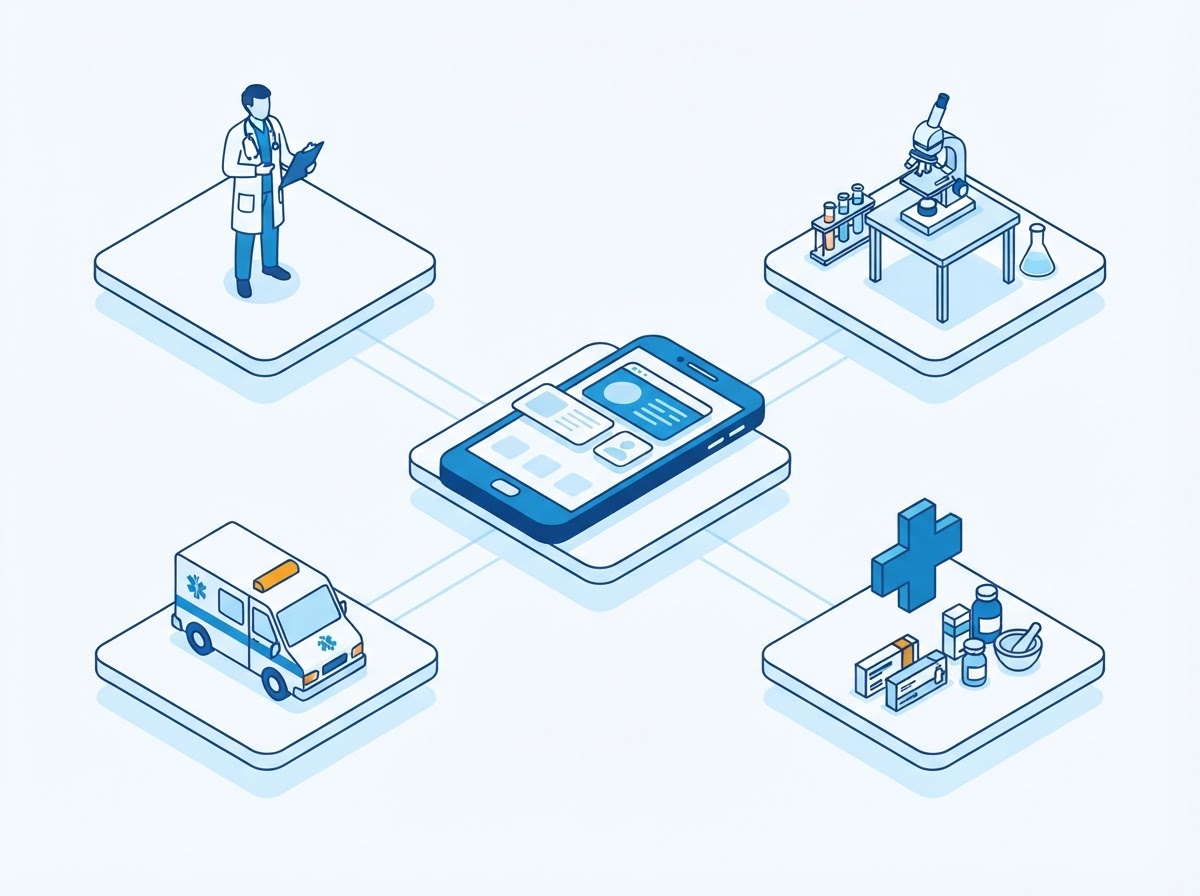
Dhanvan is a healthcare super-app built on an ecosystem model that iStudio Technologies architected to connect multiple healthcare participant types under one patient-facing product. Rather than building a single-service booking app, Dhanvan's platform treats doctor appointments as one service among several — all accessible from one patient account.
What makes Dhanvan different:
-
Patient Healthcare Access: Patients use one app to access all connected healthcare services — doctors, labs, pharmacy, and emergency services — without switching platforms or re-entering their information.
-
Doctor Consultation Platform: Doctors participate as verified healthcare providers with full profiles, availability management, and appointment lifecycle tools.
-
Video Consultation Workflows: Online doctor consultations with defined cancellation policies, refund scenarios, and payment reconciliation — handling the operational complexity that generic video tools ignore.
-
Diagnostic Laboratory Integration: Diagnostic labs operate as a distinct service category — patients can book tests, receive reports, and have results linked to their consultation records.
-
Pharmacy Services: Pharmacy partners participate in prescription-linked medicine ordering and delivery — closing the gap between prescription and fulfilment.
-
Ambulance Services: Emergency ambulance providers are integrated as a service category — accessible from the same patient account that manages appointments and health records.
-
AI Symptom Checker: An AI-powered tool helps patients understand which healthcare service or speciality is relevant to their symptoms — positioned as a navigation aid, not a diagnosis tool.
-
Multi-Service Payment Architecture: Different cancellation and refund rules apply to different service types. The payment module handles consultation, lab, pharmacy, and ambulance transactions under separate business logic.
-
Healthcare Super-App Model: Doctor appointments are one component of a broader marketplace connecting patients with multiple service providers — with consistent identity, payment, and records across all of them.
-
Provider Management at Scale: The admin layer manages independent healthcare organisations, verification workflows, commission rules, and settlement across all provider categories simultaneously.
Dhanvan demonstrates how a healthcare platform can evolve from appointment booking into a multi-provider ecosystem — and how the architecture decisions made at the start of a project determine whether that evolution is achievable or requires a rebuild.
Top AI Features We Build Into Doctor Appointment Apps in 2026
AI in healthcare apps works best when it reduces friction for patients, helps clinical teams understand what is happening in their operations, and makes repetitive administrative interactions faster. It should complement a dependable appointment system — not replace the scheduling logic that prevents double bookings and conflicts. Here are the AI capabilities we can build into your platform.
01
AI Doctor Search
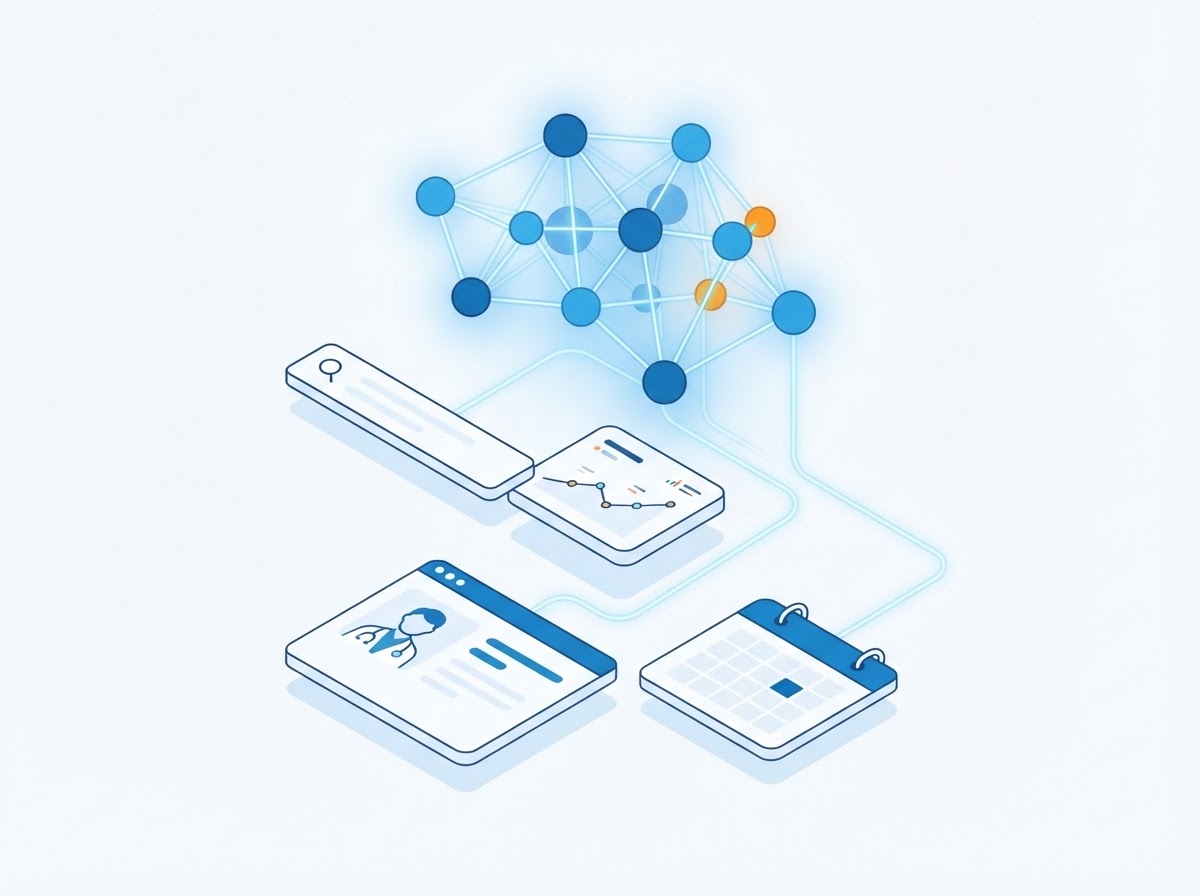
Patients search naturally: "Find a dermatologist near Anna Nagar available after 6 PM" or "cardiologist who speaks Tamil in Adyar." The AI interprets the natural language request, extracts structured search criteria — speciality, location, availability window, language — and returns relevant results. Patients who cannot name the exact speciality they need still find the right doctor.
02
AI Speciality Guidance
Patients who know their symptom but not the right speciality — "I have knee pain, which type of doctor should I see?" — can get guided to orthopaedics, physiotherapy, or sports medicine without confusion. The AI assists with navigation, not diagnosis. This distinction is maintained clearly in both the design and the content.
03
AI Appointment Assistant
Conversational AI handles the most common patient support requests: "What time is my appointment tomorrow?" / "Can I reschedule to next Tuesday?" / "How do I join the video consultation?" Patients get immediate answers without waiting for reception to pick up. Reception handles fewer routine queries and focuses on the patient in front of them.
04
AI No-Show Intelligence
Booking patterns — time of booking relative to appointment date, previous no-show history, appointment type — can be analysed to identify which bookings carry higher no-show risk. High-risk appointments receive additional reminders or confirmation prompts. Clinics that deploy this capability typically see no-show rates fall by 15 to 25 percent within three months.
05
AI Scheduling Insights
"Which doctor has the most available slots next week?" / "Which time slots consistently go unfilled at our T. Nagar branch?" / "How has our cancellation rate changed since we added reminders?" AI-powered analytics allow clinic managers to ask operational questions in plain language and get actionable answers — rather than exporting data to spreadsheets and manually computing the answer.
06
AI Patient Support Bot
Answers operational patient questions around the clock: clinic address and directions, consultation fees, accepted payment methods, what to bring for the appointment, and how the video consultation link works. Handles the after-hours patient queries that currently wait until 9 AM for a human response.
07
AI Healthcare Summarisation
Where appropriate permissions, safeguards, and human review processes exist, AI can summarise consultation notes, patient history, or diagnostic results for clinical review — reducing the administrative overhead on doctors and enabling faster, more informed follow-up care.
08
AI Operational Analytics
Authorised administrators can ask the analytics layer natural language questions: "Which speciality had the most cancellations this month?" / "Compare appointment volume across our three branches this quarter." The AI translates the question into a data query, returns the answer in plain language, and surfaces the supporting chart without requiring a data team.
Important distinction: Slot generation and conflict prevention are scheduling logic. Reminders are workflow automation. Understanding natural language intent and identifying behavioural patterns are where AI applies.
Global Security Architecture for Doctor Appointment & Healthcare Apps
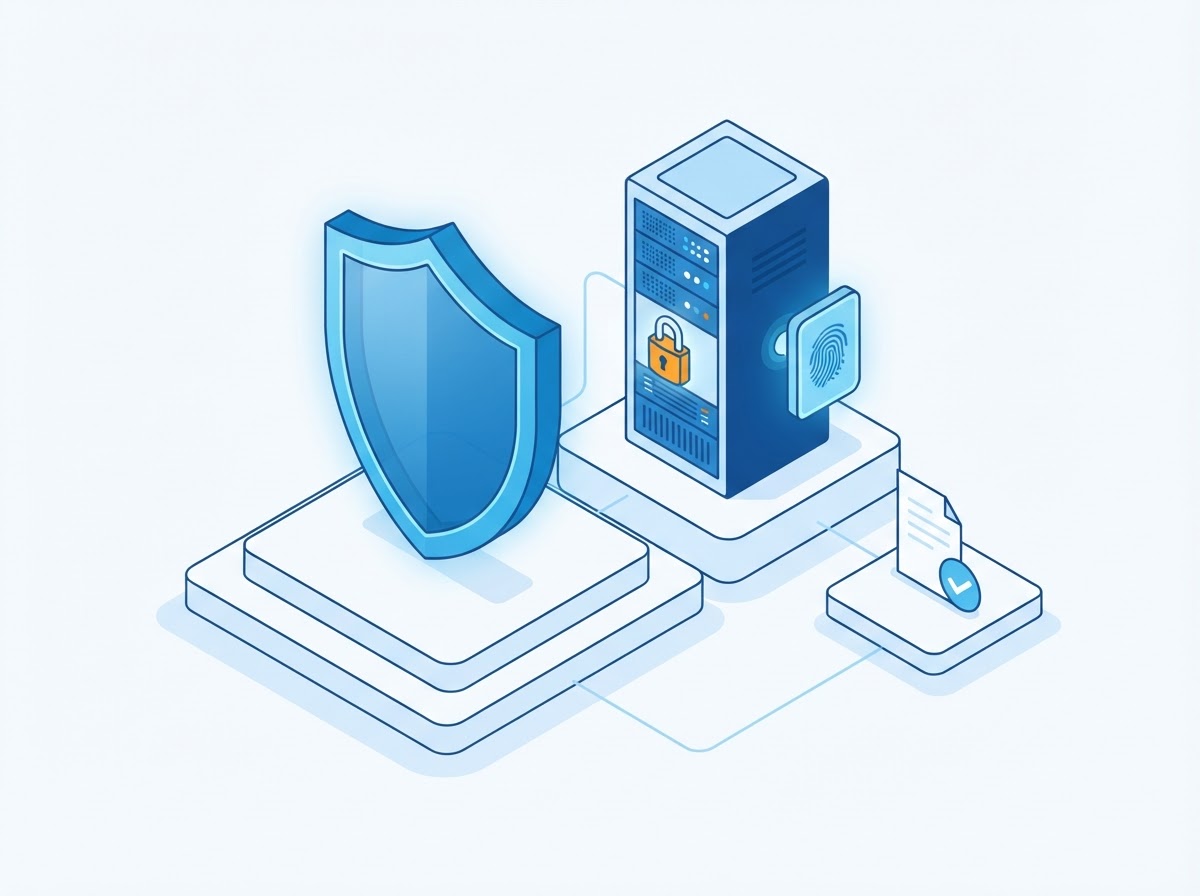
Healthcare platforms can contain patient identity, appointment records, payment transactions, medical documents, and connected healthcare information. In India, healthcare data is governed by the Digital Personal Data Protection Act 2023 and, for international deployments, by frameworks including GDPR and HIPAA-related requirements. Security for a healthcare platform is not a compliance checkbox added before launch — it is a design requirement built into every layer of the architecture from the first sprint.
Access to patient information should be based on role and clinical responsibility. A receptionist requires enough information to manage appointments efficiently — not unrestricted access to every medical record. A doctor’s access to patient data is different from a finance user’s access to payment records. A branch administrator for one clinic should never be able to see the patient data of another organisation’s clinic — even if both are on the same multi-tenant platform.
Sensitive information should be protected using appropriate controls across applications, APIs, infrastructure, and every connected external integration. When a third-party HMS or EHR connects to the platform, that connection is authenticated, scoped, and logged — not an open pipe.
Security Controls We Build Into Every Healthcare Platform:
Security Layer
What It Does
-
Role-Based Access Control
Separate permissions for patients, doctors, receptionists, managers, and admins — each user sees only what they need
-
Multi-Factor Authentication
OTP, biometric, or device-based verification for stronger account protection
-
AES-256 Encryption
All sensitive data encrypted both in transit (TLS 1.3) and at rest in the database
-
Secure API Architecture
Authenticated, rate-limited communication between apps and connected healthcare services
-
Audit Logging
Every sensitive action — data access, appointment changes, payment events — logged with timestamp and user identity
-
Organisation & Tenant Isolation
Multi-clinic and marketplace data kept strictly isolated — one organisation cannot access another’s patient data
-
Session Security
Configurable session expiry, device management, and forced re-authentication for sensitive actions
-
Backup & Disaster Recovery
Automated daily backups with tested recovery procedures and defined recovery time objectives
-
Security & Infrastructure Monitoring
Real-time alerting on anomalies, uptime monitoring, and incident response workflows
-
DPDP Act 2023 Compliance
India’s Digital Personal Data Protection Act requirements: consent management, purpose limitation, deletion-on-request
Doctor Appointment App Development Cost & Timeline in Chennai — Transparent Pricing
The cost and timeline for doctor appointment app development in Chennai depends primarily on the product model, number of applications, scheduling complexity, integrations required, and whether telemedicine, AI, or marketplace features are in scope. Most development companies in India respond to this question with "contact us for a quote." iStudio Technologies believes you deserve a realistic planning range before you invest time in a discovery conversation.
The figures below are based on actual projects delivered by iStudio Technologies in 2024 and 2025. They cover design, development, QA, security testing, deployment, and 90 days of post-launch hypercare support. Third-party API costs — payment gateways, cloud hosting, video consultation infrastructure — are billed at cost directly to the client and are not included in these figures.
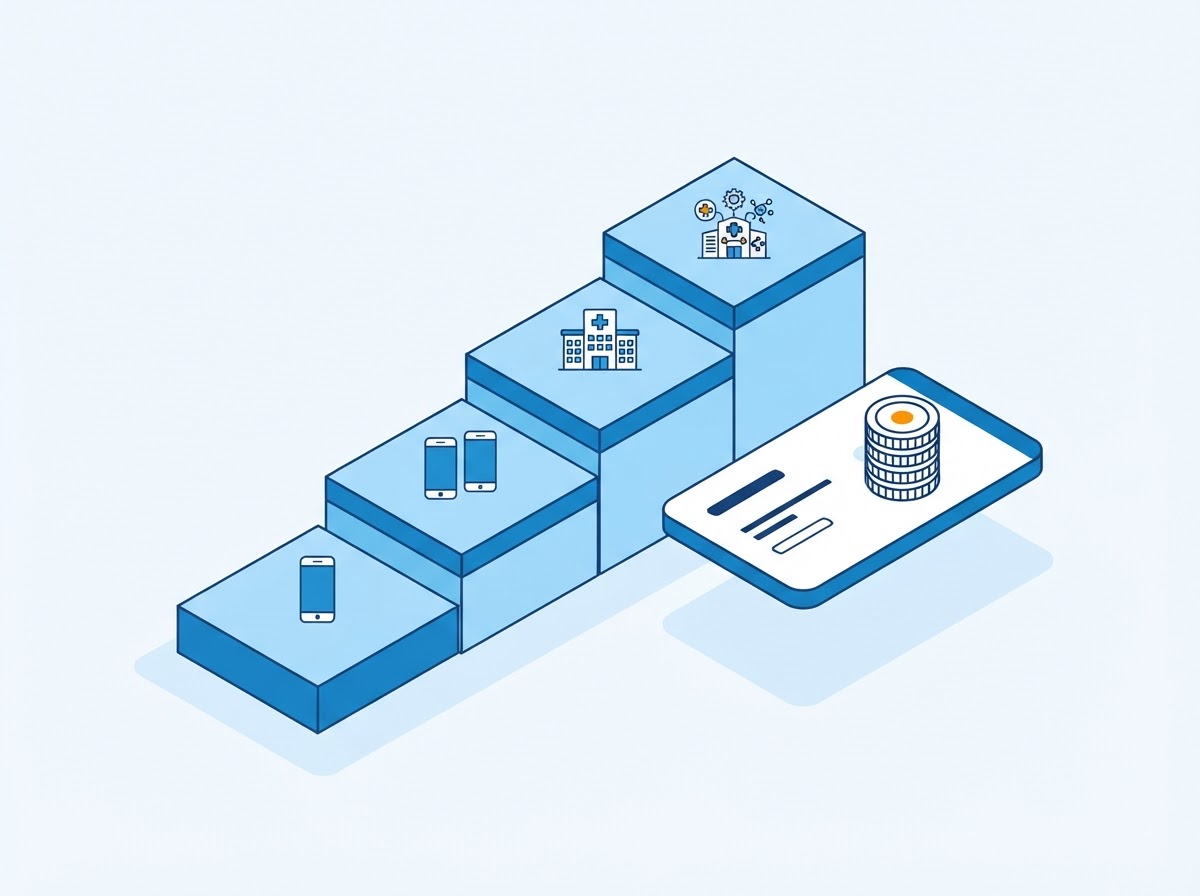
Indicative Budget by Product Type:
Product Type
Scope
Indicative Budget
Timeline
-
Clinic Appointment MVP
Patient booking, doctor schedule, reception app, admin panel, reminders
₹4L – ₹7L
10–14 weeks
-
Multi-Clinic Platform
Multiple doctors/branches, advanced scheduling, payments, reporting
₹7L – ₹12L
14–20 weeks
-
Hospital Appointment Platform
Departments, branches, hospital workflows, HMS/EHR integrations
₹10L – ₹18L+
16–24 weeks
-
Telemedicine Platform
Patient + doctor apps, appointments, payments, video consultation
₹8L – ₹18L
16–24 weeks
-
Doctor Marketplace
Provider onboarding, search, booking, payments, commissions, reviews
₹12L – ₹25L+
20–30+ weeks
-
Healthcare Super App
Consultation, diagnostics, pharmacy, AI, wearables, full integrations
₹20L+ (phased)
6+ months
What Changes the Cost?
- Number of apps: patient app + doctor app + reception + admin vs. a subset
- Platform: Android only vs. Android + iOS + Web
- Scheduling complexity: single doctor at one clinic vs. multi-doctor, multi-location with exceptions
- Telemedicine: video consultation infrastructure, virtual waiting, session management
- Payment flows: online fees, deposits, refunds, marketplace commissions, settlement
- HMS / EHR / HL7 / FHIR integrations: the most time-variable component
- AI features: speciality guidance, no-show intelligence, conversational assistant, analytics
- Security and compliance testing: additional security audit, penetration testing, DPDP compliance review
A clinic MVP that covers patient booking, doctor availability, reception management, and basic reminders sits at the lower end of these ranges. A hospital platform with HMS integration, multi-branch management, and HL7 connectivity sits at the higher end. A marketplace or super app with AI features, wearable integration, and multi-provider settlement is scoped and estimated as a phased roadmap after discovery.
Development Timeline by Phase:
-
Discovery & Workflow Mapping
Understanding your booking process, user roles, integrations needed, pain points
1–2 weeks
-
UI/UX & Architecture
Patient journey flows, wireframes, UI design, technical architecture
2–3 weeks
-
Core App Development
Patient app, doctor app, reception dashboard, admin panel, scheduling engine
6–10 weeks
-
Integrations
HMS, EHR, payment gateway, HL7/FHIR, telemedicine, third-party APIs
3–6 weeks
-
QA, Security Testing & UAT
Functional testing, security audit, real-user UAT with clinic staff
2–3 weeks
-
Deployment & Go-Live
App store submission, cloud deployment, staff training, handover
1 week
-
Post-Launch Hypercare
Bug fixes, performance monitoring, on-call support
90 days included
iStudio Technologies delivers in two-week sprints with a working software demo every fortnight. This means you see real, functioning software — not slide decks — from the first two weeks of the project. Your clinical team can test on actual devices, provide feedback, and steer direction before features are locked. Many clients go live with a focused MVP — patient booking, doctor app, and reception dashboard — and continue building integrations and AI features in the second phase while the first phase is already operational.
Technology Stack for Doctor Appointment App Development — Our 2026 Recommendations
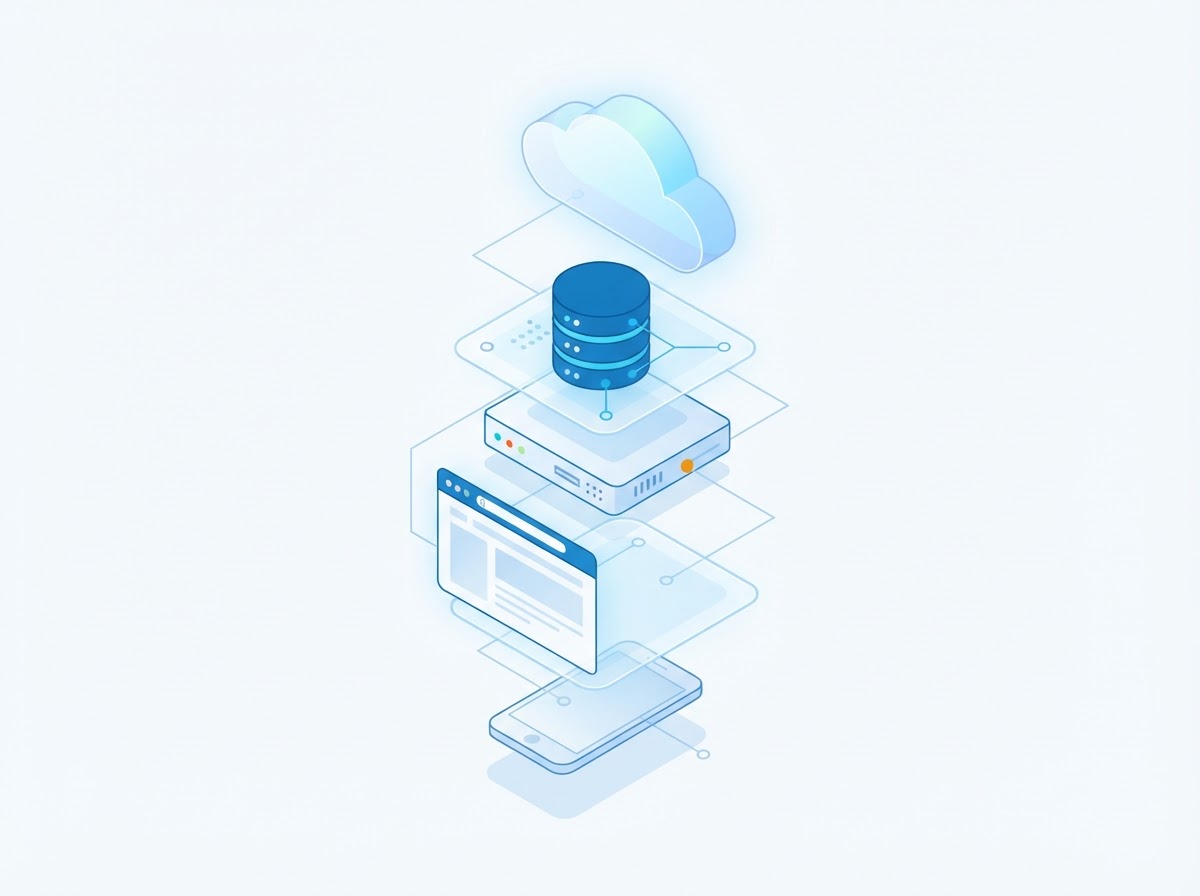
The right technology stack for a healthcare app depends on your target patient demographic, the operating systems your clinical staff use, your anticipated appointment volume, your integration requirements, and your team’s long-term maintenance capability. iStudio Technologies recommends the stack after the discovery session — not before. Here is a transparent breakdown of the options we evaluate and our reasoning.
-
Mobile frontend — Flutter (Dart): our default recommendation for most healthcare app projects. Single codebase for Android and iOS, excellent performance on mid-range Android devices used by patients and clinical staff, and strong offline capability for areas with intermittent connectivity.
-
Mobile frontend — React Native: right when your internal team already has JavaScript expertise and will be taking over maintenance after delivery. Mature ecosystem with a large component library.
-
Web dashboards — React.js with TypeScript: for the reception dashboard, admin panel, and marketplace super admin interfaces. Fast, component-based, and well-suited for data-heavy operational screens.
-
Backend — Node.js with Express: preferred for platforms with high real-time concurrency — live scheduling, simultaneous booking requests, notification triggers. Handles concurrent API traffic efficiently.
-
Backend — Python Django: strong choice when analytics, reporting, and data-heavy admin workflows are the most complex components.
-
Database — PostgreSQL: relational data model for appointment records, scheduling rules, user profiles, and financial transactions. The right choice for healthcare data integrity requirements.
-
Real-time — Redis: in-memory caching for live scheduling operations and session management. Delivers the sub-100ms response times that a slot-reservation system requires.
-
Video consultation — WebRTC with TURN/STUN infrastructure: for in-app telemedicine without requiring patients to install a separate tool.
-
Cloud — AWS or Azure: auto-scaling infrastructure with India-region data residency for DPDP Act compliance. Healthcare data processed and stored within Indian borders.
-
Healthcare interoperability — HL7 FHIR R4: for modern healthcare data exchange with HMS and EHR systems that support FHIR APIs.
Why Choose iStudio Technologies for Doctor Appointment App Development in Chennai?
Choosing a doctor appointment booking app development company in Chennai should involve more than comparing mobile interfaces and feature lists. The development partner you choose needs to understand what happens when a patient taps "Book", a receptionist enters a walk-in, a doctor changes their availability, a payment gateway fails mid-transaction, and the HMS sends a conflicting record — all within the same 30-second window. That is the operational reality of a real healthcare platform under clinical load.
At iStudio Technologies, we plan the complete healthcare workflow — not just the screens.
-
Workflow-first product planning: we begin with how appointments, doctors, and healthcare teams actually operate — before writing a single line of code.
-
Custom healthcare development: built around your clinic, hospital, marketplace, or telemedicine business — not a generic template with your logo on it.
-
Complete app ecosystem: patient, doctor, receptionist, hospital admin, and marketplace administration designed as one connected platform.
-
Healthcare interoperability: EHR, EMR, HMS, HL7, FHIR, DICOM, and lab integrations planned and executed with real integration experience.
-
AI capabilities applied meaningfully: search, no-show intelligence, speciality guidance, and operational analytics — not AI added to a feature list for marketing purposes.
-
Real healthcare product experience: SyncCarePlus and Dhanvan contribute practical experience with connected healthcare, wearable integration, and multi-service ecosystems.
-
Scalable architecture: designed for realistic expansion to more doctors, branches, cities, or service categories without requiring a platform rebuild.
-
16 years of product delivery: from early-stage startups to enterprise clients across India — the same engineering team, not a junior team working on your project.
-
90-day post-launch hypercare: the first three months after go-live are when real clinical workflows expose what the testing environment missed — our team is on-call throughout.
-
Complete digital marketing: SEO, content, paid acquisition, and app store optimisation — so the platform you build actually reaches the patients you want to serve.
How iStudio Technologies Builds Your Doctor Appointment Platform
Every doctor appointment platform project at iStudio Technologies starts with a complimentary 60-minute discovery workshop — not a sales presentation. Our business analysts and a senior mobile architect sit with your clinical and operations team to map exactly how appointments are managed today, where time and errors are being lost, and what a successful platform would look like in your specific context. This session produces a prioritised feature map and a phased delivery roadmap before any contract is signed.
- Discovery workshop → feature map → phased roadmap → signed contract: typically two weeks
- Two-week sprint cycles with a working demo every fortnight — no black-box development
- Chennai-based team: same timezone, local healthcare knowledge, on-site visit capability for clinical UAT
- UAT conducted with your actual reception staff, doctors, and administrators before go-live
- 90-day hypercare post-launch included in all project contracts at no extra charge