
Introduction
In today’s fast-paced aviation industry, airports worldwide are focusing on automation, data-driven decision-making, and seamless passenger experience. One of the most overlooked yet impactful innovations driving this change is the Smart Trolley Solution.
Unlike traditional trolleys that serve a single purpose, Smart Trolleys for Airports combine IoT, tracking technology, and digital intelligence to simplify baggage handling and optimize airport operations.
For airport authorities, this innovation isn’t just about convenience—it’s about improving operational efficiency, reducing costs, and enhancing passenger satisfaction at every touchpoint.
What Are Smart Airport Trolleys?
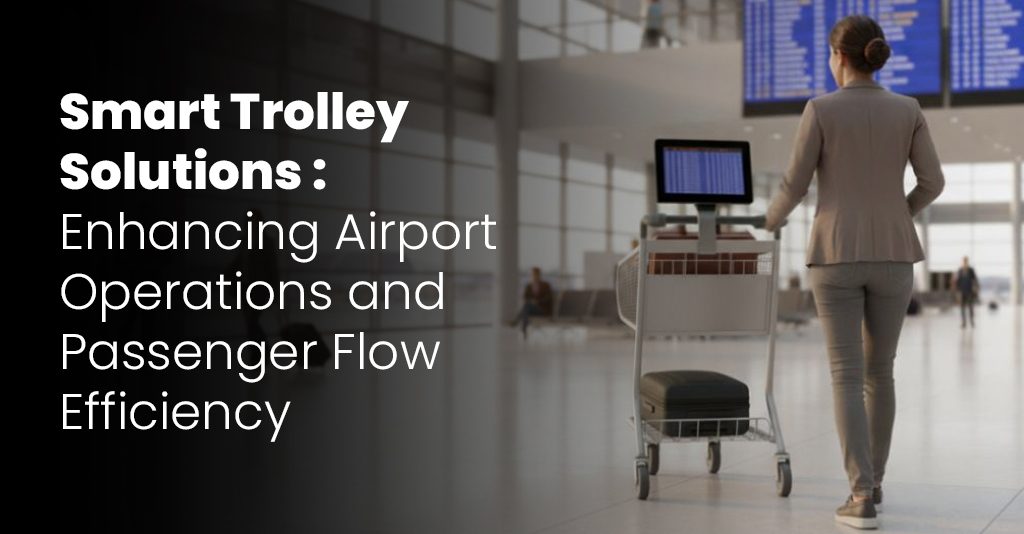
Smart Airport Trolleys are next-generation luggage carts equipped with IoT sensors, digital navigation systems, and real-time tracking capabilities. These trolleys are designed to interact seamlessly with airport systems—helping both passengers and airport staff stay informed and connected.
Using IoT-enabled Smart Trolleys, airports can monitor trolley locations, track usage patterns, and manage their fleets more efficiently. This allows authorities to prevent trolley shortages, reduce manpower costs, and improve overall passenger flow.
How Smart Trolley Solutions Improve Airport Operations
1. Real-Time Trolley Tracking and Management
With traditional trolleys, airports often face logistical challenges—lost carts, uneven distribution across terminals, and high manpower dependency.
Smart Trolley Solutions for Airports solve this with GPS and IoT integration, allowing real-time location tracking and automatic inventory updates.
Airport operators can monitor trolley availability at each gate, allocate resources efficiently, and ensure smooth operations during peak hours.
2. Enhanced Passenger Flow and Navigation
Modern airports are complex spaces. Smart Airport Trolleys equipped with interactive screens and indoor navigation help passengers easily find check-in counters, gates, and amenities.
This not only reduces confusion but also enhances passenger satisfaction, making the airport experience stress-free and efficient.
3. Data-Driven Decision Making
Each IoT-enabled Smart Trolley collects valuable data—usage frequency, maintenance cycles, and movement patterns.
This data empowers airport management teams to identify operational bottlenecks, optimize trolley placement, and plan future infrastructure with greater accuracy.
Smart analytics from trolleys can even help predict demand patterns during flight peaks or holidays.
4. Reduced Operational Costs
Manual trolley collection and distribution require significant manpower.
By automating these processes, Smart Trolley Solutions drastically cut labor costs and reduce idle time.
Real-time alerts also prevent theft or damage, saving additional replacement expenses.
5. Improved Passenger Experience
Passenger satisfaction is directly linked to how seamless their airport journey feels.
From finding luggage carts instantly to using Smart Trolleys for shopping assistance, entertainment, and gate navigation—every small detail adds up to a smoother experience.
Airports using Smart Trolley Solutions often see higher passenger ratings and improved reputation for innovation.
Integration with Airport Systems
One of the biggest advantages of a Smart Trolley Solution is how easily it integrates into existing airport ecosystems.
These systems can connect with:
- Baggage management platforms for synchronized updates
- Passenger information systems for real-time directions
- Digital signage and advertising platforms for targeted promotions
This creates a unified digital environment where every touchpoint works together to enhance efficiency.
Sustainability and Energy Efficiency
Modern IoT-enabled Smart Trolleys are designed with sustainability in mind.
Low-power sensors, rechargeable battery systems, and eco-friendly materials make them environmentally responsible choices.
By reducing unnecessary trolley movement and optimizing logistics, airports can also lower their overall carbon footprint.
Case Example: Smarter Operations in Action
Imagine a busy international airport managing over 50 million passengers annually.
Before adopting Smart Trolley Solutions, the airport faced trolley shortages during rush hours and inefficient manual collection.
After integrating a Smart Trolley System, the airport gained full visibility over its trolley fleet, improved passenger flow, and reduced manpower costs by nearly 30%.
Such real-world transformations highlight how a Smart Trolley Solution for Airport operations can deliver measurable ROI and long-term efficiency.
Key Benefits for Airport Authorities
- Centralized control over all trolley units
- Reduced maintenance downtime through proactive alerts
- Optimized resource planning with predictive analytics
- Enhanced passenger engagement via interactive digital screens
- Improved operational safety through smart tracking and anti-theft systems
By implementing Smart Airport Trolleys, airport management teams can align with global “smart airport” standards and stay ahead in technology adoption.
Expert Insight
As airports evolve into smart hubs, passenger mobility and convenience will become critical KPIs.
Investing in Smart Trolley Solutions is not just a technology upgrade—it’s a strategic step toward building a data-driven, efficient, and passenger-friendly airport ecosystem.
Conclusion
The future of airport management lies in automation, efficiency, and connectivity—and Smart Trolleys for Airports are a key part of that evolution.
By embracing IoT-enabled Smart Trolley Solutions, airport authorities can simplify operations, enhance passenger flow, and deliver world-class service standards.
Smart airports aren’t built overnight—they’re built by making smarter choices today.
Start with your trolleys, and let innovation move your passengers forward. ✈️